 amogh.cloud
I build what I can’t stop thinking about.
Amogh Upadhyay, GenAI Engineering Lead at Kotak Neo, Mumbai
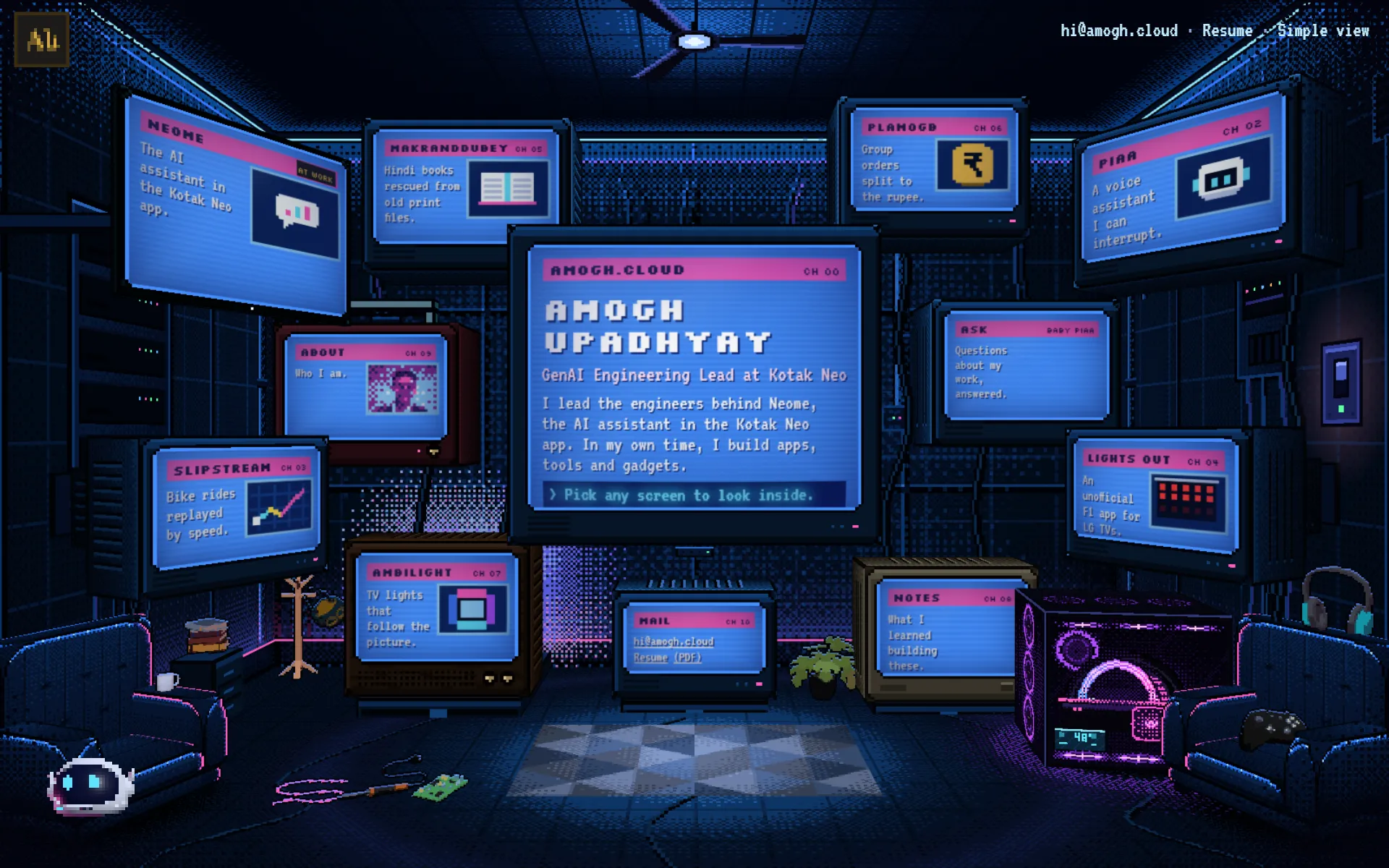
In my own time, since February 2026
- makranddubey.comHindi books recovered from print filesStarted Feb 2026
- PlamoGBGroup orders split to the rupee, co-builtStarted Apr 2026
- SlipstreamRides replayed by speedStarted Aug 2026
- PiaaA voice assistant you can interruptStarted Aug 2026
- Lights OutAn unofficial F1 app for the TV remoteStarted Sep 2026
- AmbilightA light strip I soldered for my parents’ TVStarted Sep 2026
At work
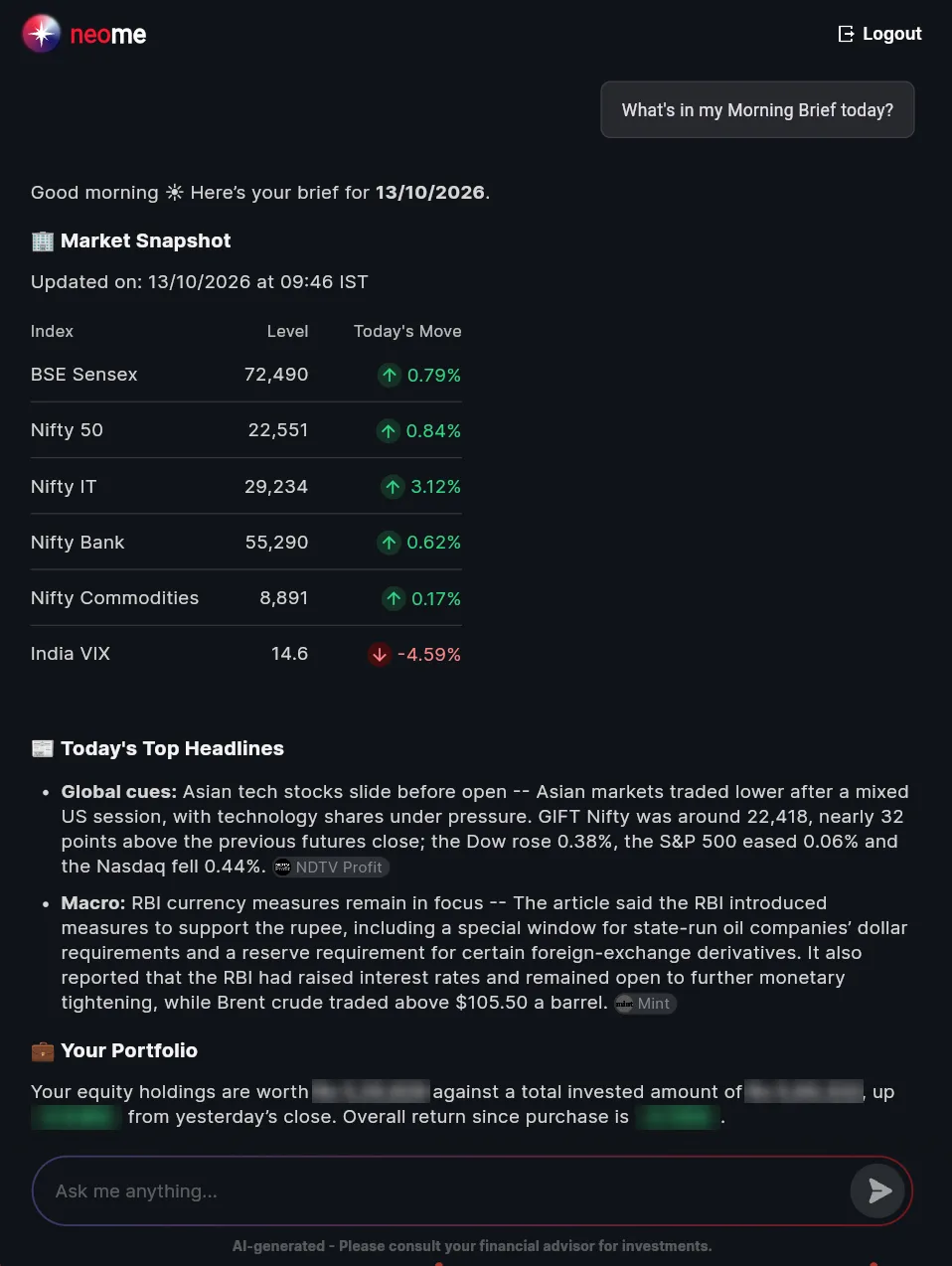
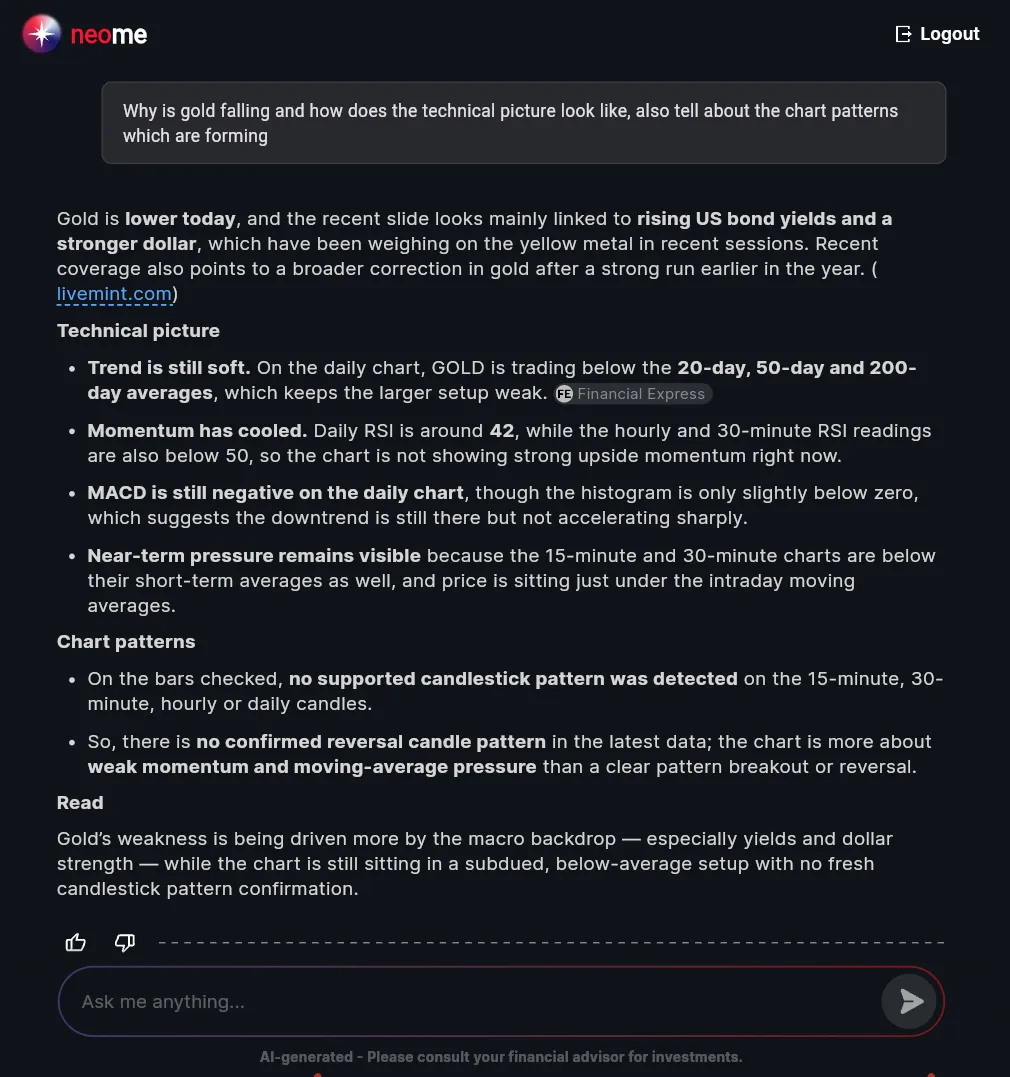
At Kotak Neo, I built the first working version of Neome, the AI assistant investors use every day in the app. I now lead three engineers, and I still build some of its key parts.
Personal projects
Outside work, I turn ideas into things I use, then keep improving them. Most of them need something I haven’t done before. I taught myself to solder for my parents’ TV, recovered four Hindi books from old print files and built a voice assistant that runs on my own PC. Built in my own time, from the idea and the design to the code.
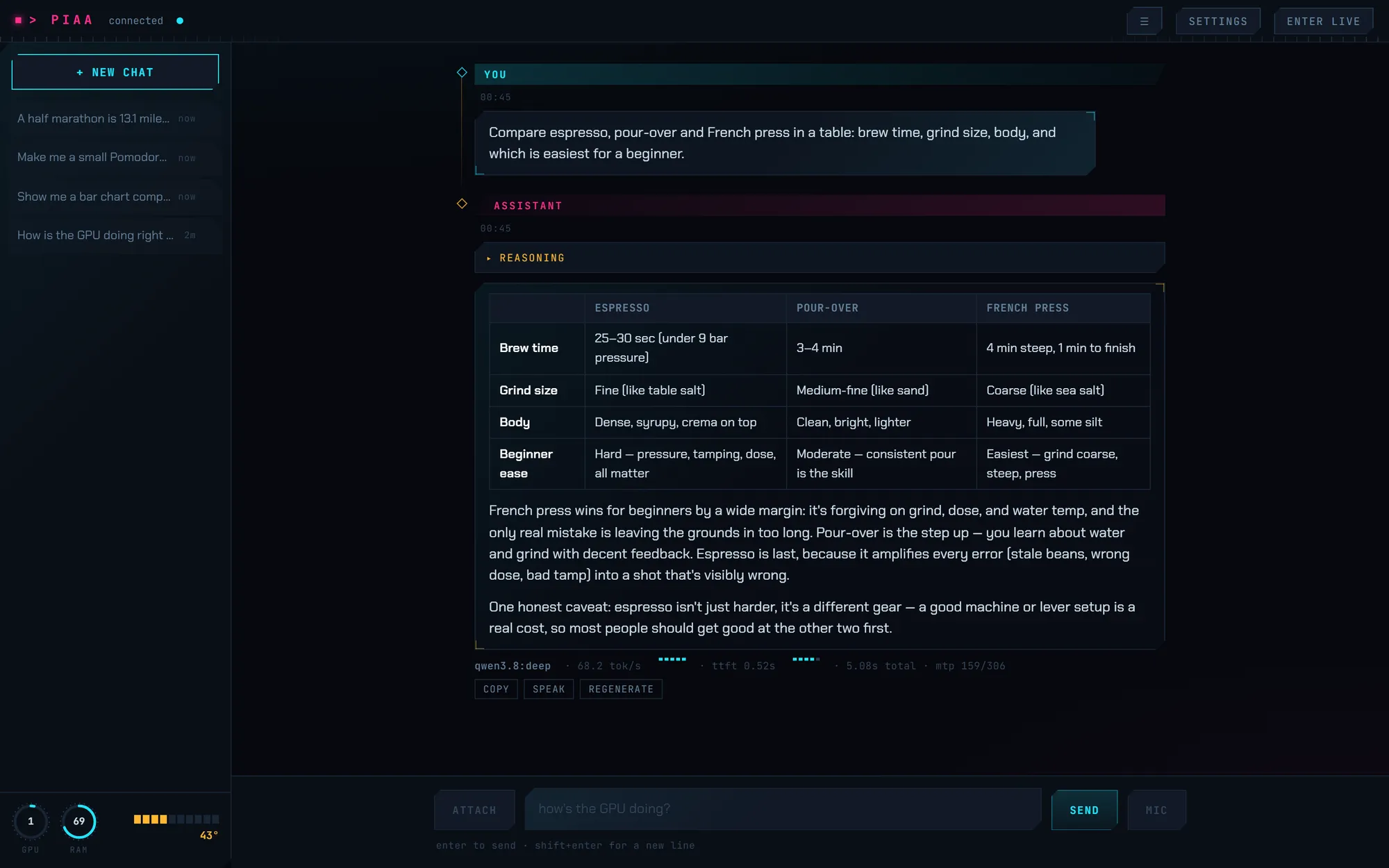
- P102An AI voice assistant that runs on my own PCPiaa is a voice assistant I can interrupt mid-sentence. It runs on one gaming graphics card in my PC and handles my mail, WhatsApp and files, with its private tools kept on that PC. I measured every design choice, including three conclusions I had to take back.
Piaa
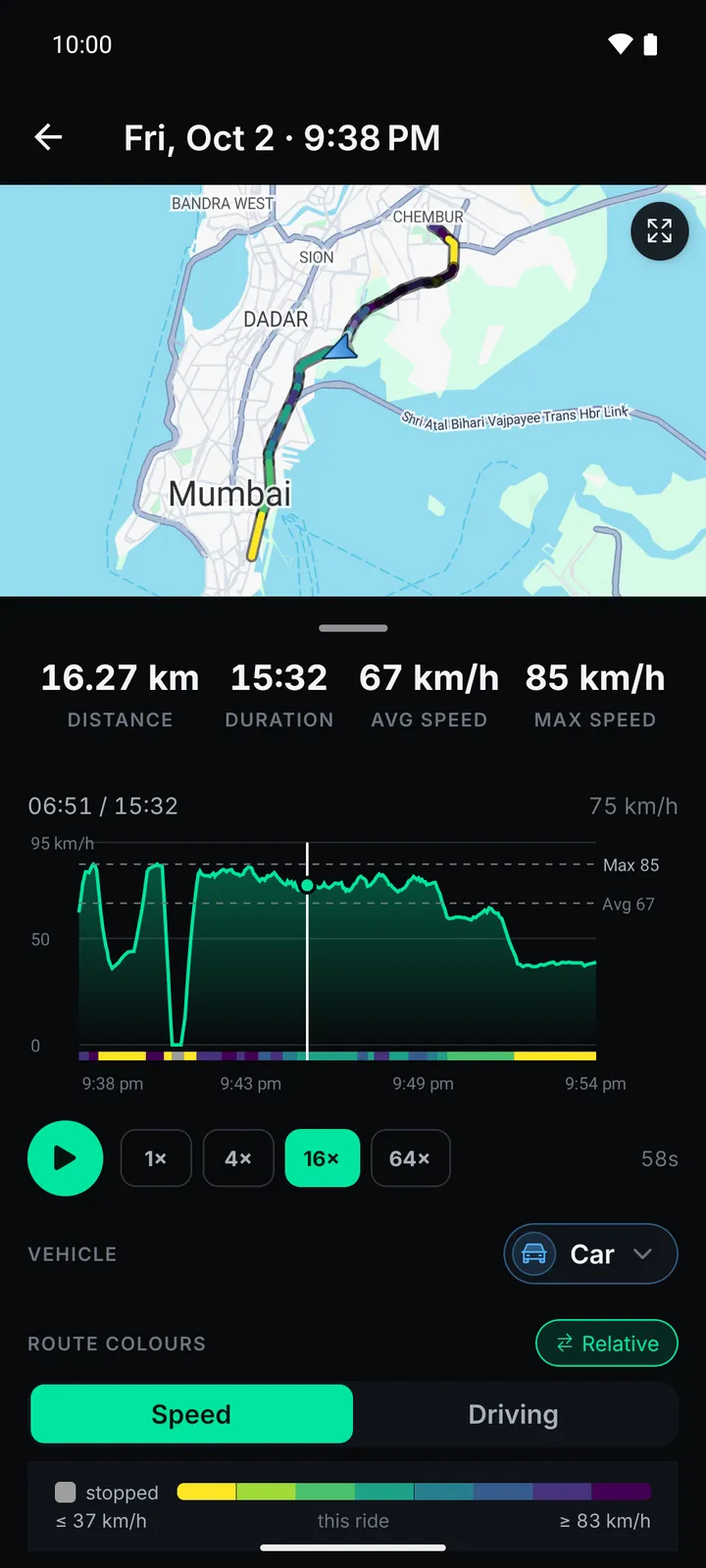
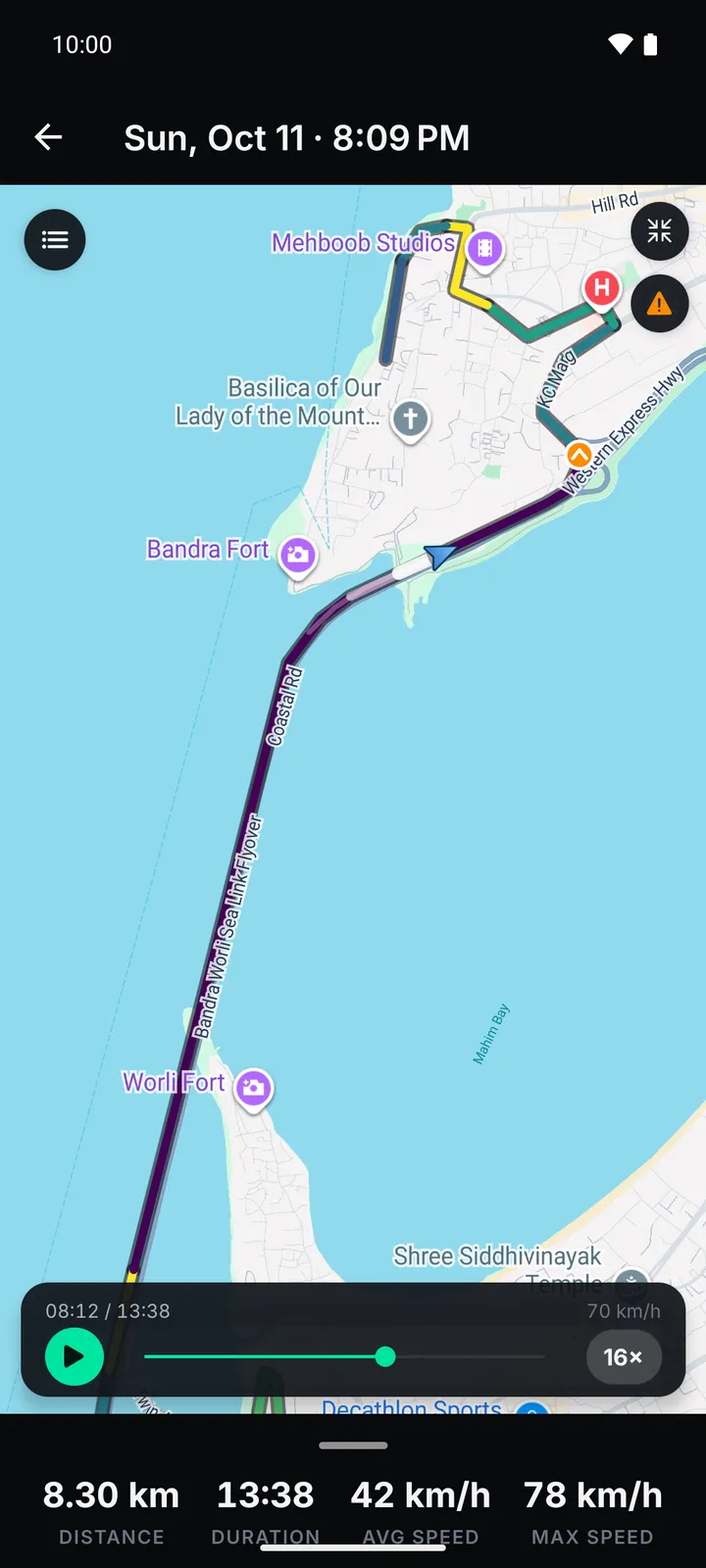
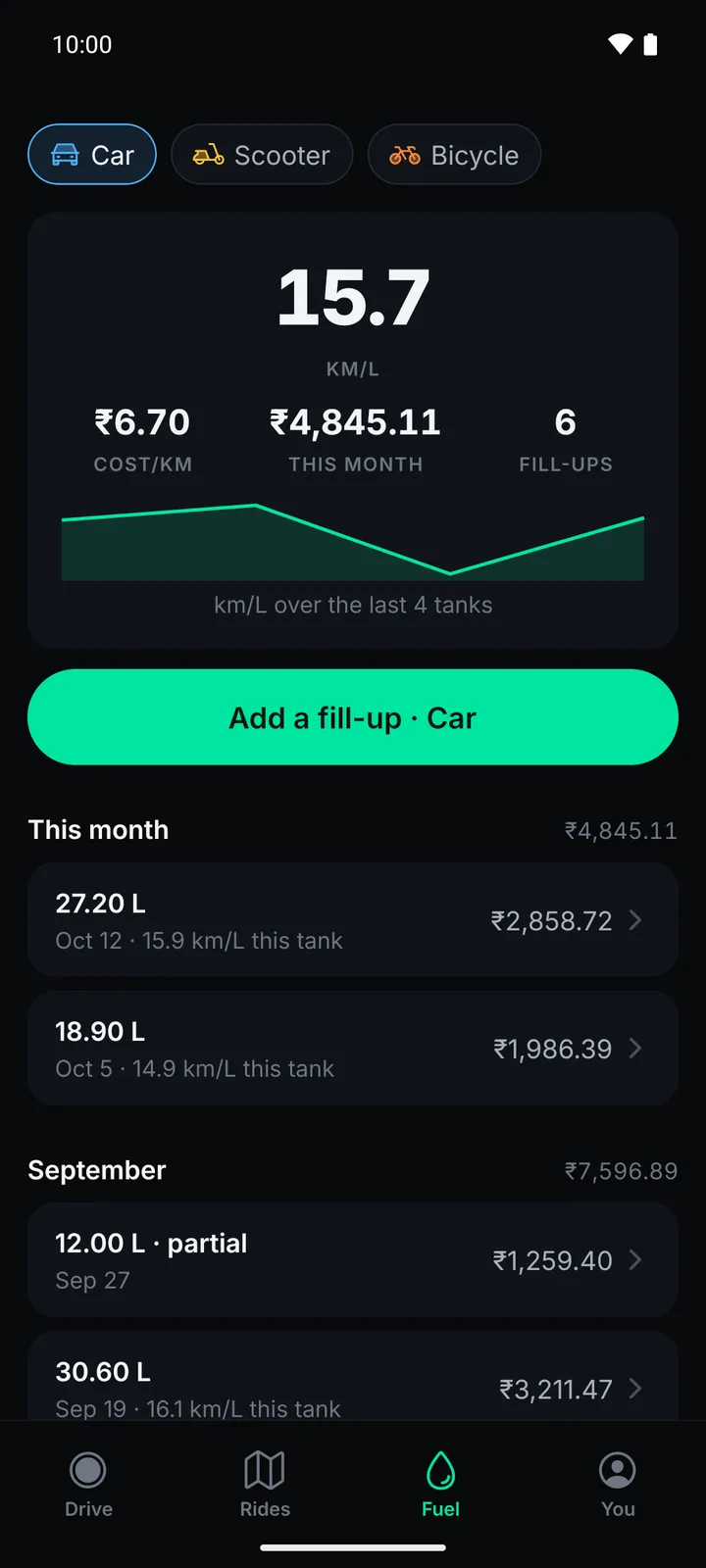
- P103A ride-tracking app for AndroidSlipstream records a ride using only your phone and replays it coloured by speed. Friends and family can ride together and see each other live, and it tracks fuel spends. I designed it to throw away bad GPS readings, keep ride files small and run on free hosting. I tested every build on my phone.
Slipstream
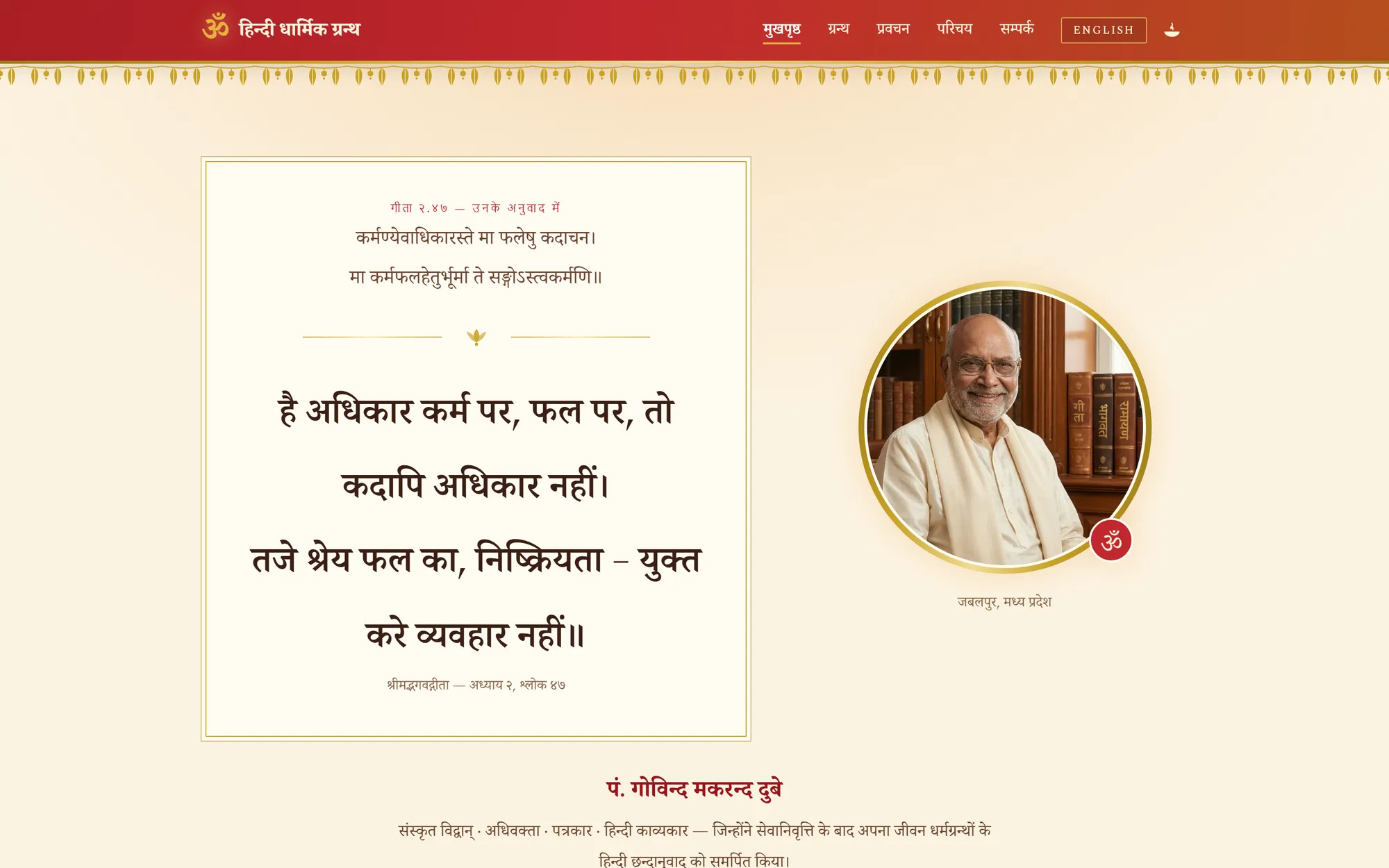
- P104Four Hindi books, rebuilt as a website and an appPt. Govind Makrand Dubey's four Hindi verse translations existed only as print files that computers could not read. I recovered the text from the typesetter's old files, checked every book against independent verse counts, and built a website and an offline Android reader for readers over fifty.
makranddubey.com
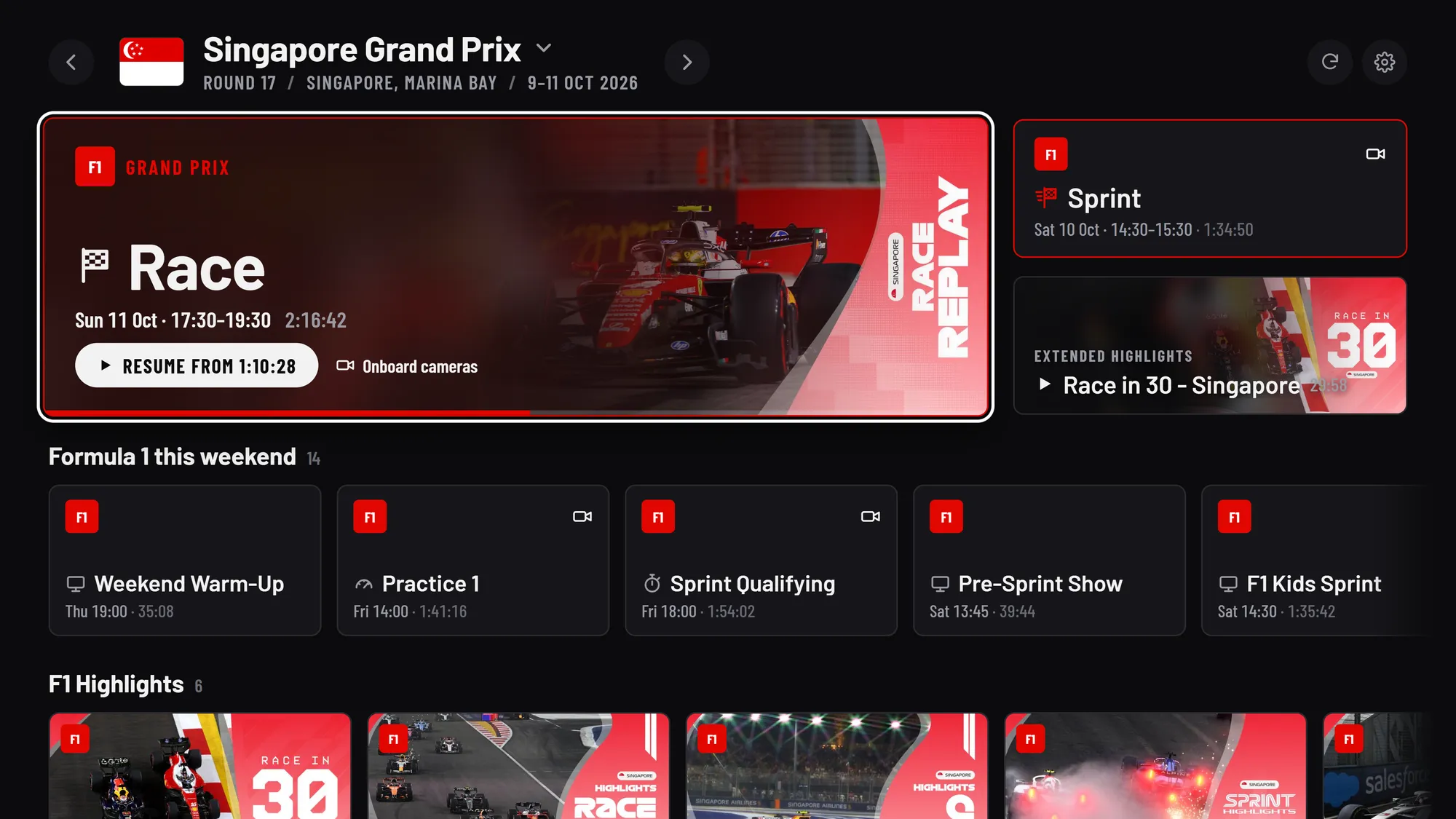
- P105An unofficial F1 app for LG TVs, built for the remoteI found no official F1 TV app for LG TVs, so I built an unofficial one. It is designed for the TV remote, so moving around feels natural. You can switch cameras, and a timing panel stays in sync with the race. You get every onboard camera and seasons back to 2018, all from the sofa.
Lights Out
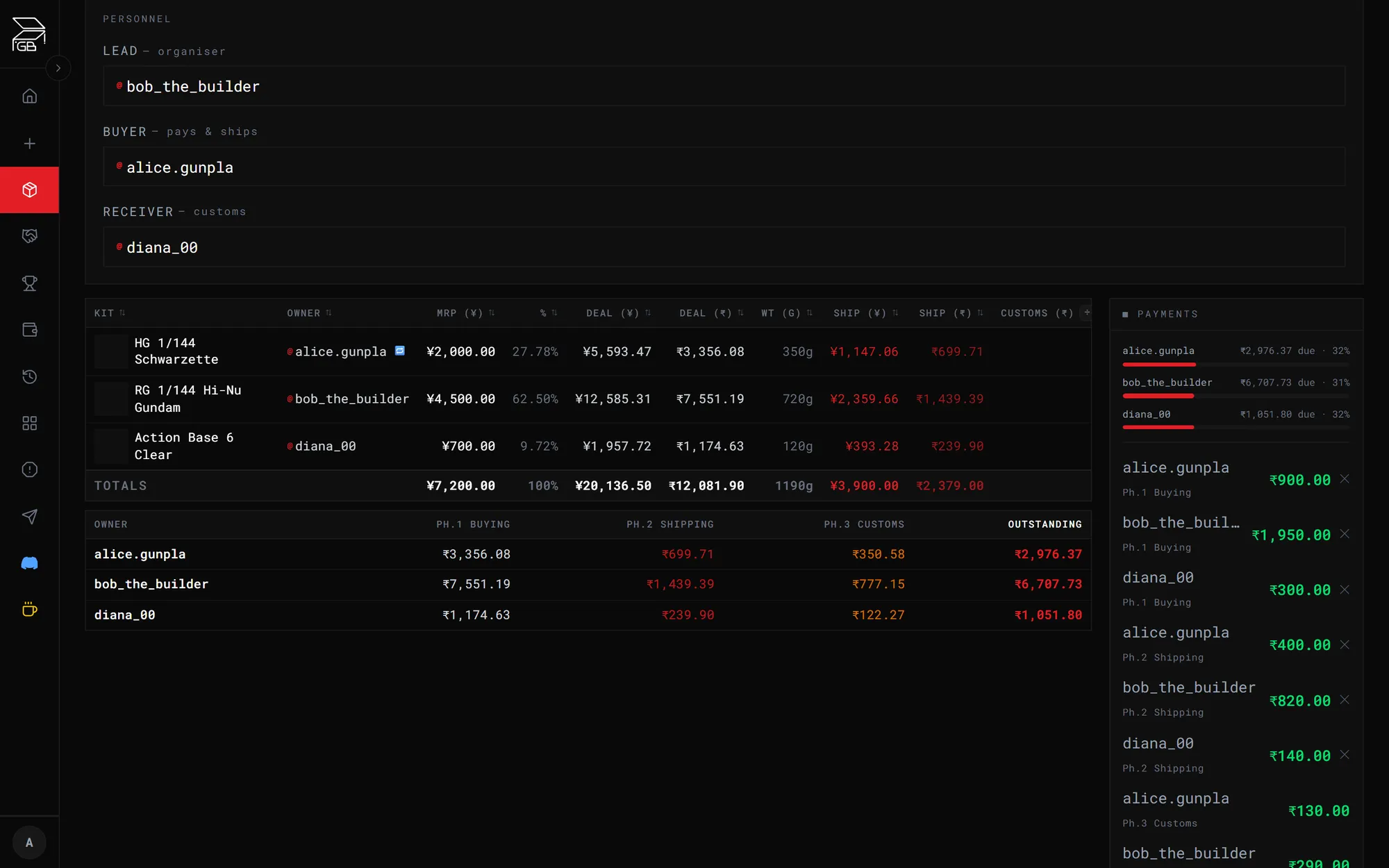
- P106Group buying for India's Gunpla model-kit communityA model-kit community on Discord uses it every day to order from Japan and China together. People claim kits, the app works out what each person owes, including shipping and customs, and it tracks payments and parcels. It replaced their spreadsheets. I co-built this unofficial community tool with Vinayak and Yash.
PlamoGB
Highlights
Numbers from my projects. Tap any number to see where it comes from.
| Number | What it means | Topic |
|---|---|---|
| 47 lakh rupees47 lakh rupeestotal of the payments members have recorded in PlamoGB.Methodsum of every recorded payment, all three phases, rounded to the nearest lakh (47.2 lakh).NotePlamoGB records payments that members make to each other. The money never passes through the app.SourceTotals from the app's database, 12 Nov 2026ClassMeasured by me · 12 Nov 2026 | in payments that members of a Gunpla community have recorded in the group-buy app I co-built | PlamoGB |
| 27 billion parameters27 billion parameterssize of the language model Piaa runs on my graphics card.Methodthe model's published parameter count.SourceThe model's published sizeClassSpecification · 14 Oct 2026 | the size of the AI model behind my voice assistant. It runs on one gaming graphics card at home, not in the cloud | Piaa |
| 700 of 700 verses700 of 700 versesGeeta verses recovered, against the book's own count.Methodrecovered text compared with the book's own verse count.SourceThe book's own count, checked by my pipeline, 2026ClassPublic source · Oct 2026 | Gita verses recovered from the typesetter’s old files, checked against the book’s own count | makranddubey |
| 170.6 km/h170.6 km/htop speed one short commute reported, from a single corrupted fix.Methodpeak of the speed series on the recorded ride.NoteDoppler speed and position both came from the same corrupted solution, so cross-checking one against the other could not catch it.SourceMy ride of 19 Aug 2026ClassMeasured by me · 19 Aug 2026 | the speed my phone’s GPS claimed on a short commute. My ride app’s filter catches readings like this | Slipstream |
 Baby Piaa
Ask Baby Piaa, my site's AI assistant, a question about my work. She answers from this site's pages and can be wrong.
Notes from building AI systems
- My test said two models were the sameIt couldn't see the difference. A test sensitive enough to measure the gap showed the two versions of Piaa's model disagree on about one word in sixteen.
- Keep the prompt append-onlyA cached prompt only saves time if each request starts exactly where the last one did. Small things in Piaa kept changing the past, and the silences grew.
- When silence turned into a requestI limited what Piaa's speech-to-text could write and forgot to allow 'nothing'. So on a silent mic it made up a sentence, and Piaa answered it.
- Where Piaa's silences came fromMaking Piaa answer quickly wasn't one big fix. It was finding each silent second, from tool searches before it spoke to a starved speech model.
I like to work across the whole product, from the idea and the design to the code.
I start from the person who will use it, sketch the interface, shape the architecture, and write and review code. At work, I do this with my team and the product team; on most of my own projects, I do all of it myself. AI coding agents help me move faster, so more ideas reach real users, but deciding what is good, and when it is done, is still a human call.
- Everything I build starts with the people who will use it, like retail investors at work, riders who want a better record of their rides, a relative whose books existed only as print files, and a hobby community splitting parcels from Japan. How they use it decides what gets built and what gets left out. On my own projects I make that call, and at work we make it as a team.
- In my experience, AI is weakest at the parts that need a feel for the person using them, so I design those myself. That means navigation that feels natural with a TV remote, Hindi text set for readers over fifty, and a ride replay you can read on a phone at a glance.
- I have built backends on Java and Cloudflare Workers, frontends and Android apps, an AI model running on one graphics card, a TV app, and LEDs I soldered for my parents’ TV.
- I test a change side by side with the old version before I believe it. When the logs disagreed with me on Piaa, I retracted three of my own conclusions and published the corrections.
- Since February 2026, alongside a full-time lead role, I have built a reader for my relative’s books, a group-buy tool with Vinayak and Yash, a voice assistant, a ride tracker, an unofficial F1 app for LG TVs, and ambient lighting. A desk robot for Piaa is next.
Each square is a week of the past year on my GitHub. The stronger the colour, the more code I wrote that week.
From government data platforms to leading an AI team.
- Technology for rural India, first through an IIT Bombay fellowship inside the Ministry of Rural Development and then on government data platforms.
- Backend engineering at Kotak Innovation Lab, on retail investing products.
- Leading Neome, Kotak Neo's AI assistant, from first prototype to daily use. I built its first working version and now lead three engineers.
- The same habits on my own projects, where I can share the numbers. They include a voice assistant, a ride-tracking app, Hindi books brought online and an unofficial F1 app for LG TVs.
- GenAI Engineering Lead (Sr. Manager)Kotak Securities (now Kotak Neo)
- Backend EngineerKotak Securities
- Senior Research FellowMinistry of Agriculture & Farmers Welfare
- R&D Fellow (IIT Bombay CTARA fellowship)Ministry of Rural Development
- M.Tech, Technology and DevelopmentIIT Bombay
- B.E., Computer ScienceUIT RGPV